While it is more complicated, take a 1% revenue increase and deduct your incremental material cost and it gets you in the ballpark. In most businesses I have engaged with, the people below the C-suite could figure this out but had either no true incentive to make decisions based on this and therefore had no reason to have this “front of mind” or were given corporate’s idea of a metric/kpi that they could influence. What really matters … did you “win” or “lose” … last shift, last week, last month. OEE tells the hard truths, good, bad and other.
While many corporate assigned metrics/kpi’s are well thought out, they can create siloed thought rather than teamwork. Let’s use a simple sports example of why a kpi does not answer the “winning or losing” equation. Think about an NFL line that had no penalties against them, but the score is 24-7 against and the opponent has sacked the quarterback 7 times in the half. No “penalties” is a statistic, but does not give an accurate representation of the game, that’s what a scoreboard is for. In manufacturing, OEE tells you whether you are winning or losing. By understanding OEE attainment versus goal, on each shift, each week, and each month the scoreboard tells you the ongoing story for manufacturing, “by how much” are we “winning” or “losing”. Knowing this gives management perspectives of urgency, actions and business risk.
To learn more about our approach to transforming your organization and maximizing OEE, visit us at 4 Wall Production System
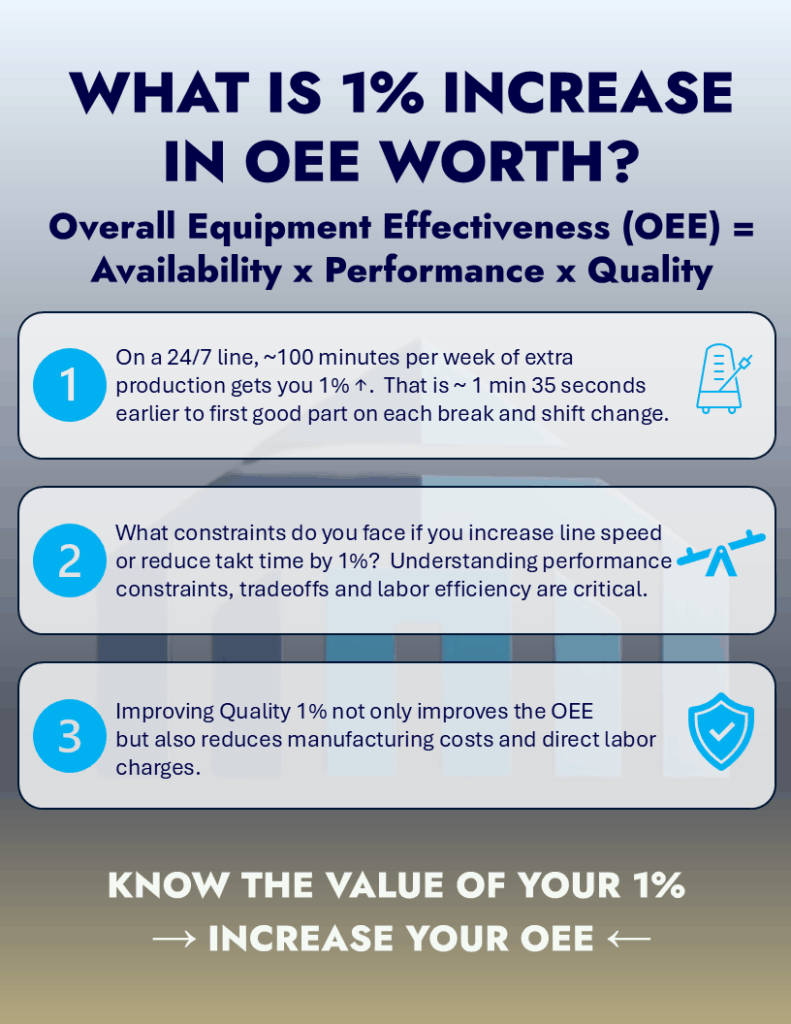
Know if you are winning or losing through your OEE!
Knowing what 1% improvement in OEE is worth may be for management to help make business decisions, but OEE tells the entire Team whether you are Winning or Losing. Engaged workplaces must know this!
To learn more on small improvements, visit Atomic Habits: Tiny Changes, Remarkable Results by James Clear .